
Reflexology
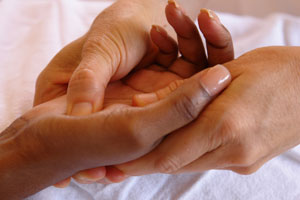
Reflexology is a touch therapy that uses pressure to certain points on the hands, feet, and sometimes ears. These points relate to the body's organs and glands. Touching the points creates nerve impulses that send messages to the brain and, in turn, to the organs. Reflexology can be used to relieve pain, strengthen the body, and improve vitality and well-being.
What to expect at a reflexology session
Reflexology is sometimes called zone therapy, because the system divides the body into 10 zones that run from the head to the toes and out to the tips of the fingers. There are five zones on each half of the body. One zone runs from the tip of the thumb to the head and from the head to the big toe. Pressing on the hands or feet in this zone will affect the body organs in that zone.
Through a health history and by feeling the points on the hands and feet, a trained reflexologist finds places of imbalance or blockages in the 10 zones. Sensitive or painful spots on the feet suggest imbalances. Touching those points helps the body regain its balance. One patient says:
I do strength training with a personal trainer twice a week. She usually gives me a mini upper body massage at the end of each session. She also is very knowledgeable of reflexology and will use pressure in massaging my hands for specific ailments—neck ache, low back pain, and now shingles.
History of Reflexology
The science of reflexology used today was founded by Dr. William Fitzgerald, MD, an American ear, nose, and throat surgeon. He found that firm pressure on certain points in the hands and feet numbed parts of the body—and he was able to do surgery without using local anesthesia. As he looked into his findings in more detail, he developed the zone theory and, in 1917, published his book, Zone Therapy or Relieving Pain at Home.
In the 1930s, Eunice Ingham, a massage therapist, furthered the field of reflexology and wrote books called Stories the Feet Can Tell and Stories the Feet Have Told, which have become texts for modern practitioners. Reflexology is used in complementary medicine in the U.S. and Europe.

