
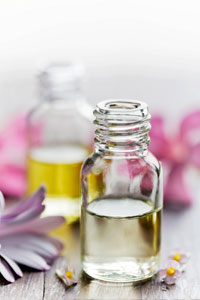
Flower Essences
In 1930, Dr. Edward Bach, an English doctor and homeopath, gave up his practice and went back to the countryside of Wales to research healing plants and flowers. Bach was an unusual man for his time; he thought that if we heal our souls, our bodies will heal, too. He believed plants and flowers held the secret to healing our souls, and wanted to unravel their mysteries.
So, Bach spent years in nature. When he had strong feelings, he let himself be drawn to the flower or plant that restored his emotional balance. He collected the "essence" of these flowers and made 38 Bach flower remedies and a blend of essences called "Rescue Remedy"—used to rebalance our energy field after an upset or prepare for a known stressor.
Bach believed all animals—and plants—have energy fields, and this is the link from flowers to our bodies. The healing offered by flower essences is subtle, perhaps closest to homeopathic medicines.
How to use flower essences
Dr. Bach grouped his 38 flower essences into seven categories, which he believed are common themes in all our lives:
- Fear
- Loneliness
- Over-sensitivity
- Sadness
- Uncertainty
- Lack of interest in life
- Over-concern for others
Take a single flower essence by putting a few drops in your drink throughout the day. You can combine essences to make a remedy for a certain feeling or event, or to shift or balance a personality pattern.
You may not see any change—or you may notice that an issue feels less intense or more clear. You may need to use the flowers for a month or more to shift patterns. Keep them on hand to nourish your soul and balance day-to-day feelings.
Have fun with flowers! If "we are what we eat," why not include flower essences in our daily anti-stress "meal" plan? Flowers express love, creativity, and beauty.
Common essences for times of healing
Here are a few Bach flower remedies that can be used during emotional moments:
- Aspen – I'm afraid but don't know why
- Clematis – I'm drifting and dreaming, and I can't seem to focus
- Holly – I'm angry and I resent not being able to...
- Honeysuckle – It was so much better when...
- Hornbeam – I'm not sure I can cope with the work I have to do today
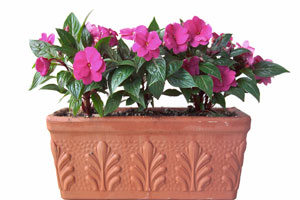
- Impatiens – I can't wait!
- Larch – I can't do that
- Mimulus – I'm afraid of that
- Mustard – all of a sudden, I feel so down
- Oak – I'm so exhausted, but I must keep going
- Olive – These last few (months, years) have been so hard, I'm worn out
- Pine – guilt: it's all my fault
- Scleranthus – I can't make up my mind
- White Chestnut – I can't get that thought out of my mind
- Wild Rose – I don't care anymore, I give up
- Willow – it's not fair
Flower essences are offered online and at some drug stores, at low cost. You can safely use them for adults, children, and pets. (To prevent bacteria growth, the flowers must be preserved, so a small amount of brandy is used.) Start with one issue at a time. Invest in a booklet to help you learn—you should be able to find one for under $5.00.
You can learn to work with flower essences for yourself by simply starting to practice—flower by flower. If you want more formal training, the Flower Essence Society and some companies that make flower essences offer training.
Flower Essences vs. Essential Oils
Flower essences are sometimes confused with essential oils. Both are made from flowers, but in different ways:
- Essential oils are pressed or distilled with alcohol or steam from a plant or flower. They are used in perfumes, on the skin, in a bath, or inhaled to affect brain chemistry.
- To make flower essences, blossoms sit in pure water in the sun, and the electrical patterns from the flowers are released into the water. They are used to heal our energy field, which links to our emotional and soul well-being. A few flowers can provide a lot of "essence," so flower essences are safe for the environment.

