
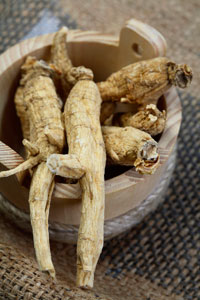
Ginseng
Ginseng root (Panax quinquefolium) has been used to treat many illnesses for more than 2,000 years. In Chinese medicine, it is called "man root," because it can look like a human being. American ginseng is the Western herb, but there are also Chinese, Korean, and other ginsengs.
Uses:
- Ginseng taken with a meal improved glucose tolerance. American ginseng may help control blood sugar levels in diabetes. Be careful; other types of ginseng may raise glucose levels.
- In small studies, ginseng has shown some benefit for treating breast cancer.
- In one 3-month study, ginseng extract was better than a placebo at improving breathing in people with chronic obstructive pulmonary disease (COPD)—with no side effects.
- Red Korean ginseng has been used to help treat stomach cancer and erectile dysfunction.
Forms: Capsules, tea
Cautions
- Ginseng can interact with other drugs, making them stronger or weaker. For example, it can weaken opium-based pain drugs, digoxin, warfarin, and transplant drugs. But ginseng may increase the strength of estrogens or steroid drugs taken with it, so overdoses are possible.
- If you take blood-thinning drugs like heparin, warfarin (Coumadin®), or aspirin, you may want to avoid ginseng. In one study, ginseng reduced the effectiveness of warfarin, which could make a blood clot more likely.
- Taking ginseng with any antidepressant may cause mania. With phenelzine sulfate (Nardil®), ginseng may cause headaches, shakiness, and manic episodes.

