
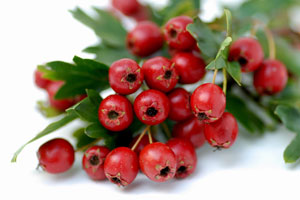
Hawthorn
The hawthorn shrub (Crataegus monogyna) is in the rose family.
Uses:
- In a test tube, hawthorn has been shown to kill larynx cancer cells.
- Hawthorn's effects may come from the flavonoids it contains (antioxidants that help prevent cell damage), and hawthorn may also improve lipid levels.
- Hawthorn improves blood supply to the heart. Studies have found that hawthorn can strengthen the heart after a heart attack, improve heart rhythm, and improve function of the left ventricle (which is often weakened by kidney disease). Compared to placebo, people with heart failure who received hawthorn felt less tired and short of breath.
- Hawthorn has also been used as a headache remedy.
Forms: Fresh berries, capsules, powder, tincture
Cautions
- Hawthorn may cause a rash, headache, sweating, dizziness, palpitations, sleepiness or agitation. Hawthorn can also cause stomach upset.
- Hawthorn may interact with some blood pressure drugs that work by dilating the blood vessels.
- If you take drugs for heart failure, high blood pressure, angina, or heart rhythm problems, hawthorn may interact with these drugs. Hawthorn does not interact with digoxin.

