
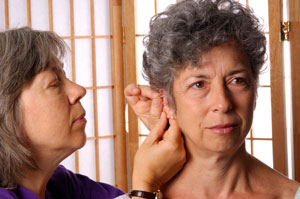
Acupuncture
Acupuncture is an energy medicine that acts on the body's subtle energy system to change the mind and body. It involves the scientifically-proven use of fine, hair-thin needles placed into one or more of the 2,000 acupuncture points on the body. The needles shift the flow of qi to relieve pain and symptoms. The needles feel more like pressure than a pinprick.
You are unique, so your treatment plan will be tailored to you. Your number of visits will vary, based on the type of illness, how severe it is, how long you have had it, and how you respond to treatment.
Caution: if you bruise easily or wear a pacemaker, tell your acupuncturist before your session. Ask your acupuncturist if he or she uses disposable needles, which is safer than sterilizing and reusing needles.
Once the needles are placed, most patients relax into a deep rest during the 20 to 30 minute treatment, often with soothing music. An acupuncturist may suggest a series of visits to help the body regain its balance of qi.
Annie, the wife of a dialysis patient, says:
Angel also had the clenched teeth thing, but luckily that's gone, at least for now. It lasted for a month or so. It did help him a lot when he went to a very good acupuncturist, who applied pressure (not needles) to one specific point in the jaw joint, and Angel said the instant relief was wonderful! Of course, unless the underlying cause of the stress (the way you are feeling about a particular problem) is not tackled and approached differently, you will be clenching again in a couple of hours! Just thought you'd like to know that a) you can get physical relief from the symptoms, and, b) once you get it, it's not necessarily there for good!
How acupuncturists are trained
The American Academy of Acupuncture and Oriental Medicine says that acupuncturists are trained for 4-5 years and must pass a state Board exam.
Acupuncturists will have a set of letters after their names, based on the state in which they practice. You may see:
- CA (Certified Acupuncturist)
- LAc (Licensed Acupuncturist)
- DAc (Diplomate in Acupuncture)
How and Acupuncturist Might Treat Diabetes or Kidney Disease
"Acupuncture can support some diabetic patients by lowering blood sugar levels over time, improving the function of the cells in the pancreas, helping to regulate blood pressure, and generally improving vitality. Acupuncture is also used with success to help treat addictions, and can help when patients need to adjust to a diet for diabetes that eliminates refined carbohydrates.
"Some acupuncturists work with patients to help regulate the immune system after a kidney transplant. Acupuncture can help the body to receive the new organ, by regulating, rather than stimulating, the immune system."
About 70 schools offer training in TCM and acupuncture.
History of Acupuncture
First used in China more than 2,500 years ago, acupuncture became known in the U.S. after President Nixon's visit to China in 1972. Many studies have been done to look at whether acupuncture is safe and effective. In a 2002 report, the World Health Organization found acupuncture to work for a large number of health problems. Here are some of them:
- Low back or neck pain
- Sciatica
- Tennis elbow
- Knee pain
- Sprains
- Facial or dental pain
- Headache
- Temporomandibular joint (TMJ) problems
- Rheumatoid arthritis
- Nausea and vomiting
- Stroke
- High blood pressure
- Renal colic
- Side effects of radiation or chemotherapy
- Hay fever
- Depression
- Peptic ulcer

