
What Causes Anemia?
Did you read Module 1—Kidneys: How They Work, How They Fail, What You Can Do? If you did, you know that one of the jobs of healthy kidneys is to make a hormone called erythropoietin (a-rith-ro-po'-uh-tin), or EPO for short.
Red blood cells are made by stem cells in your bone marrow. Each red blood cell lives just a few months, so you need new ones all the time. When your red blood cells run low, your bone marrow gets a message to make more. This message is in the form of a hormone or EPO, sent by healthy kidneys.
When your kidney function drops, wastes start to build up in your blood. Some of the wastes are toxic—so your red blood cells don’t live as long. At the same time, your kidneys may start to make less EPO. With less (or no) EPO, your bone marrow does not “hear” the call to make more red blood cells. Not enough EPO is one cause of anemia when you have kidney disease.
Most people whose kidneys fail have anemia. (If you have polycystic kidney disease, or PKD, you may not.) Anemia begins early in kidney disease. By the time kidney function is 45% or so of normal, your EPO level starts to drop. As you lose more function, you make less EPO.
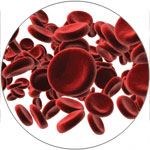
Normal red blood cell count

Anemic red blood cell count

