
Prayer
If you believe in a higher power—and maybe even if you don't—prayer may have a positive effect on your health. Many people pray for outcomes they want, which may or may not happen. In some cultures, the approach to prayer is more along the lines of, "What is in the highest interests of all?" or, "Thy will be done". One patient says:
I am in a small women's Bible study, and I ask for intercessory prayer when I have an acute problem with my health or life. Through the power of God, all things are possible. We try to meet weekly and go out for breakfast and birthdays. I could not make it without my women friends.
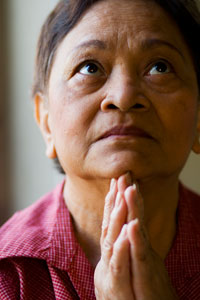
There have been a number of studies in the medical literature on what happens when others pray for someone who is ill, either nearby or even far away:
- A study of 799 heart patients who were randomly assigned to prayer by others or a control group did not find a benefit. Neither did a study of 95 dialysis patients.
- A double-blind, randomized study of 3,393 patients with bloodstream infections found that people who were prayed for had shorter hospital stays and less fever than controls.
- A double-blind, randomized study of 219 women having in vitro procedures for fertility found that women who were prayed for were more likely to get pregnant than controls.
- A double-blind, randomized study of 900 heart patients found that people who were prayed for had an easier recovery than controls.
- A double-blind, randomized study looked at 406 patients with depression and anxiety—and the 90 people who prayed for them. Both groups improved significantly, compared to controls.
As beings of body, mind, and spirit, our spiritual health bears some attention. Being grateful for your life, your friends and family, the blue sky or the flowers in a garden can all help us to nourish our spiritual side. Nothing to be grateful for? Try keeping a gratitude journal. Write at least one thing in it each day—and you'll be teaching yourself to focus on the positive.

