
Craniosacral Therapy
Craniosacral therapy (CST) is a gentle touch therapy to support the nervous system. It works by balancing the pulse of cerebrospinal fluid that surrounds and protects the brain and spinal cord. This fluid flows from the skull to the tailbone. By balancing the pulse, the whole nervous system can relax, and the body can work more smoothly. Sometimes a release of old emotions that have been stored in the body occurs.
CST is based on the theory that each person has an inner wisdom that knows what is needed to heal. Some clients choose CST to better adapt to the stresses and needs of everyday life. CST has also been used to treat chronic pain, brain dysfunctions, depression, migraines, learning disabilities, dyslexia, and nervous system disorders.
What to expect at a CST session
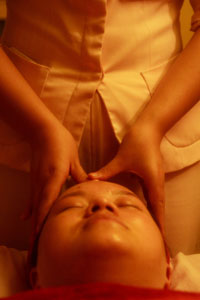
Clients lay on a massage table, fully clothed, and the practitioner gently touches the body. Practitioners feel for the pulse of the cerebrospinal fluid and apply gentle pressure to parts of the head, spine, and tailbone to balance the rhythm of the fluid.
Intuition is also important in this work, and practitioners listen to the body as they work. With the client, they may be able to solve some of the body's mysteries—releasing emotions so the nervous system can relax into its natural flow.
Sessions are typically 30 to 60 minutes. Clients often report feeling very relaxed and sometimes drift into a mild sleep stage. Other times, the client may have an image or feeling that is brought up by the release of old emotions.
History of Craniosacral Therapy
CST was developed by an osteopathic doctor named John Upledger. During spinal surgery, Dr. Upledger noted a rhythmic pulse of the craniosacral system that he could not explain. In 1975, he became a professor at the Osteopathic College at Michigan State University and led a team of doctors to explore the fluid movement, and how touch could be used to balance the craniosacral system. In 1985, Dr. Upledger started his own school. As of 2000, the Upledger Institute has trained more than 50,000 CST practitioners worldwide.

