
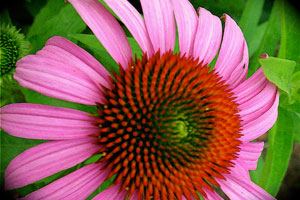
Echinacea
Echinacea (Echinacea angustifolia, E. purpurea, or E. pallida), or purple coneflower, is a common wildflower in America.
Uses:
- Echinacea may boost the immune system by alerting white blood cells to take action against a virus or bacteria. A meta-analysis of 14 studies in 2007 found that echinacea reduced the risk of getting a cold by 58%.
- Echinacea is an antioxidant that helps rid the body of free radicals that can cause cell damage.
- If you want to try echinacea, take it as soon as you feel that scratchy throat that means you're coming down with a cold or the flu. Don't take echinacea all the time—only when you're fighting a bug.
Forms: Capsules, tincture, tea
Cautions
- Since echinacea boosts the immune system, don't take it with drugs that suppress the immune system, like steroids or other transplant drugs—it may reduce their effects.
- Echinacea can be toxic to the liver. It should not be taken for more than 8 weeks, or with other drugs that are toxic to the liver, like acetaminophen (Tylenol®), steroids, methotrexate, the heart rhythm drug amiodarone (Cordarone®), or the anti-fungal drug ketoconazole (Diflucan®, Nizoral®, or Sporanox®).
- If you are allergic to ragweed, you may be allergic to echinacea, too. An allergy can show up as a rash, hives, wheezing—or a more severe reaction. People with atopic dermatitis are more likely to be allergic to echinacea.
- At high doses, echinacea may reduce the ability of sperm to swim.

