
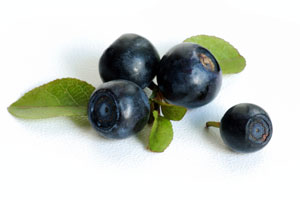
Bilberry
Bilberry (Vaccinium myrtillus) is a European fruit like the blueberry.
Uses:
- In mice, bilberry has been found to protect the kidneys from damage and prevent bowel tumors.
- Strong antioxidants (called anthocyanins) in bilberry help increase blood flow to the eyes. Bilberry may improve or protect against eye diseases like diabetic retinopathy and macular degeneration.
- Antioxidants in bilberry can also protect against heart and blood vessel disease, and cancer.
- Bilberry contains proteins that can aid wound healing.
Forms: Capsules, tincture, fresh berries, tea
Cautions
- If you take blood-thinning drugs like heparin, warfarin (Coumadin®), or aspirin—or if you take acetaminophen (Tylenol®), ibuprofen (Advil®, Motrin®), or naproxen (Naprosyn®, Aleve®)—you may want to avoid bilberry, and include blueberries or cranberries in your meal plan instead. Bilberry can increase the risk of bleeding because it keeps platelets from clumping together.

