
Western herbalism
Herbalism is the medicinal use of plants, many of which have been used for hundreds or even thousands of years by many medicinal traditions. What we'll show you here are plants that have been studied and reported on in medical journals.
In healthy people, many of these plants can be used with few side effects. But when your kidneys don't work well and you take other drugs, keep in mind that "natural" doesn't always mean safe. Look at the uses—and the cautions—before you decide to use a plant medicine, and always tell your care team what you are taking.
How herbalists are trained
Herbal practitioners are not licensed in the U.S. There are a few ways to learn herbal medicine:
- Many herbalists train with a cultural healer as an apprentice, or with self-study.
- Others attend a school that offers degrees in clinical herbalism. These herbalists may have more training in anatomy and physiology and treatment of disease.
- Still other practitioners learn about herbs to use in their practice. A chiropractor or acupuncturist may use herbs to complement their treatments.
A few respected sources offer training in Western herbalism: a "Professional Member AHG" (American Herbalist Guild) is given by peer review, and a "Fellow" or "Member of the National Institute of Medical Herbalists" (FNIMH or MNIMH) is given by a group in England.
When you choose an herbalist, think about your needs. Do you want to strengthen your immune system? Or, do you have symptoms that you would like to relieve? Ask about an herbalist's training in the area where you need support.

Safety tips for herbal medicine
Many research studies have shown that plants can be safe and aid healing. But even though plants and herbs are "natural" and sold over the counter, they are not always harmless. Herbs are drugs. Some herbs, if misused, can be harmful or even lethal. Here are some safety tips:
- Do not try to diagnose yourself. Get professional advice before you take any new herbs. Talk to your doctor. If you have diabetes, check your blood sugar levels to see if there are any changes if you try a new herb.
- Some herbs (or wrong doses of herbs) can stress working kidneys or build up to toxic levels if the kidneys are not working. Before you use an herb, find out if it:
- Is filtered out by the kidneys
- Makes the blood clot faster or slower
- Raises blood pressure
- Affects potassium levels
- Add one herb at a time to see how it affects your body, and always start with a small amount. Be patient when using herbs with a chronic illness—herbs may not work as quickly as prescription drugs. Allow 2-4 weeks before you expect to see changes.
- Ask your doctor or pharmacist if an herb will interact with your other drugs.
- Read the labels. Combination products raise the risk of drug interactions, and may not contain enough of any one herb to be useful.
- Keep a symptom diary.
Finally, even if you are told that an herb product is safe, if you don't feel right about it, don't take it. Your intuition is a source of knowledge for you.
Herbs That Can Harm the Kidneys
Some herbs should be avoided by anyone who has a kidney problem, because they can cause kidney damage or make it worse. These include:
- Juniper berry
- Lovage root
- Parsley (yes, that parsley)
- White Sandalwood
Many other herbs—including ones we list in Kidney School—may not be right for you if you have high blood pressure, take certain other drugs, or have had a kidney transplant. Be sure to learn about any herb you think about taking.
Herbal Products Come in Many Packages
You can use Western herbs to help treat specific symptoms or improve your general well-being. Look for "USP" on the label of herbal products. This means the product follows all of the U.S. Food and Drug Administration rules for drugs. Buying herbal products in bulk may make them cheaper—but they can also lose potency faster. Herbal products come in many forms:
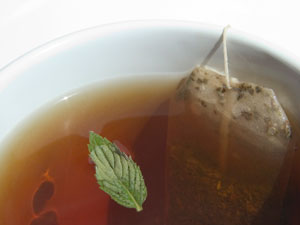
Teas. Herbal teas are not really teas at all, because they don't contain tea leaves. These teas are really herbal infusions. Teas can be useful medicines. You can change the strength by using more or less plant, or make blends. If you are on a fluid limit, count herbal teas into your daily fluid allowance.
Note: Some herbal teas may contain potassium or cause your body to lose potassium. Ask your doctor before you use herbal teas.
Tinctures. Plant tinctures are liquids made with a small amount of alcohol—each dropper full has about the same amount of alcohol as a ripe banana. Tinctures are often used when you want a quick result, but they can also be used as tonics. Alcohol can be irritating to children or some adults.
Capsules. Capsules may contain ground-up herb in its natural state or a standardized extract, using more of the plant's active ingredients. Capsules are more powerful than teas or tinctures. Standardized extracts have only been used for a few years, and they change the natural relationship between the parts of the plant, so they may cause more side effects.
Doses. Ask your doctor, a dietitian, or a trained herbalist about doses for teas, tinctures, or capsules. Often, larger doses are used for short periods of time to treat urgent symptoms. Smaller doses are used for longer periods of time to improve well-being.

