

The last challenge we'll talk about in this module is for fistulas and grafts only. When a fistula or a graft is stuck too often in the same small area, the vessel walls can weaken. Over time, the weakened walls balloon out. In a fistula, this is called an aneurysm. In a graft, it is called a pseudoaneurysm (false aneurysm). There is a risk of rupture, and repair is needed if the skin over an aneurysm or pseudoaneurysm won't heal or if few needle sites are left.
Both of these challenges can be avoided in the same way: by placing new needles at least 1/4 inch away from the last sites used. In this way, no one site is overused. In a fistula, needle holes heal themselves. Grafts don't heal themselves. Each dialysis needle leaves a hole. If the needle is inserted in the same small spot over and over, the hole will get bigger. Over time, this tears the graft. This condition is referred to as "one-site-itis", and means the graft must be replaced.
Try to keep track of where your next site should be. Draw a picture of your access (or ask your surgeon to draw one for you). Make copies of the picture and use it to mark the needle sites each time you have dialysis.
It is your job to know where your next needle sites are and to tell your dialysis team member. It is your access and your health that is at stake. Keep track of your needle rotations!
What Is the "Buttonhole Technique"?
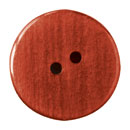
Some people who have fistulas don't rotate their needle sites at all. Instead, they use the same two (or sometimes four) spots over and over. In time, the needle channels through the skin heal over, like a pierced earring hole. The holes look just like what you'd see for a button, so this is called the Buttonhole technique.
There is not enough scientific evidence to say that everyone with a fistula should use the Buttonhole technique. But people who do say that it is nearly painless, and the channels guide the needles into the access at just the right angle.

